Problem
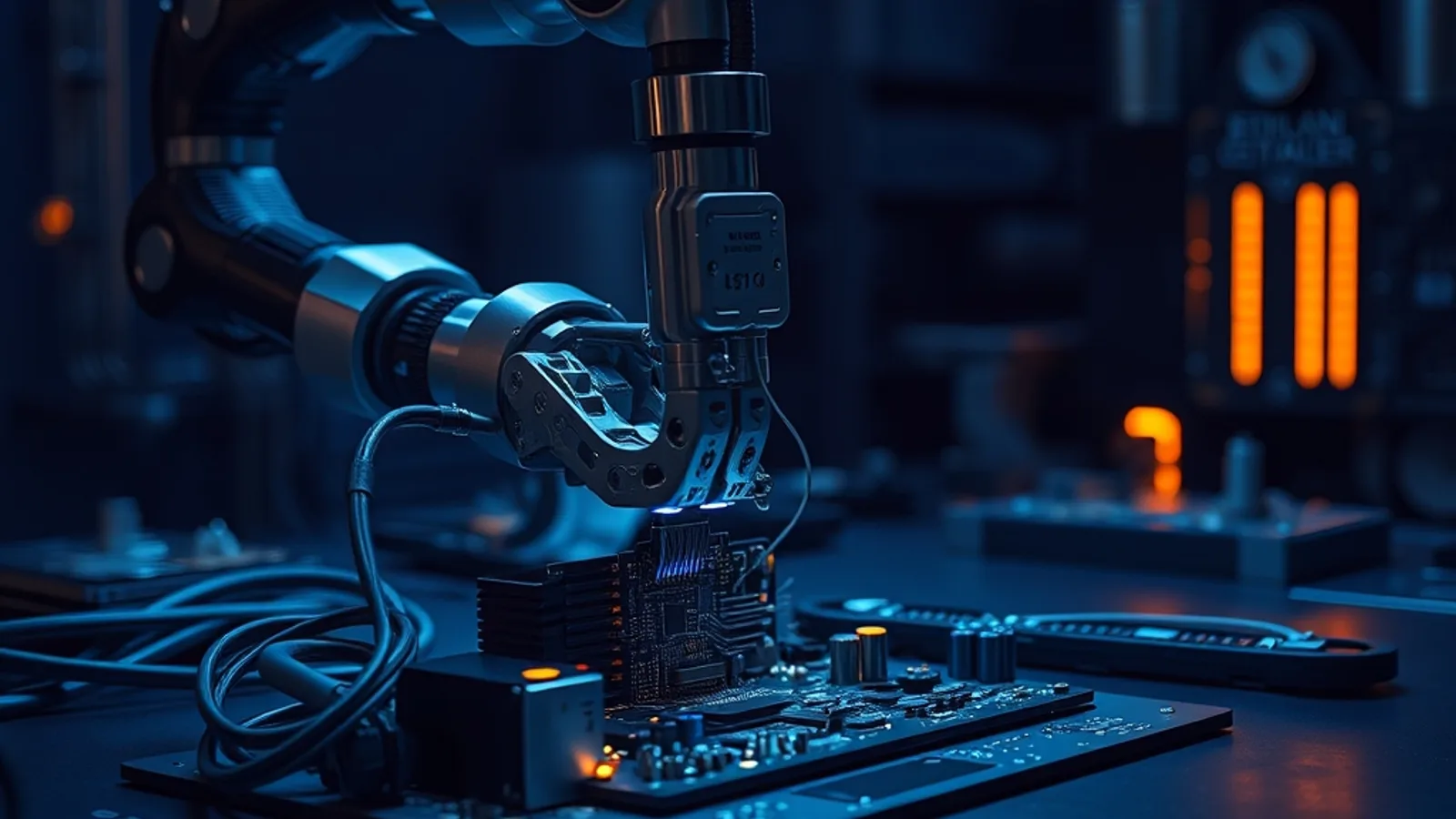
Physical AI is often a bottleneck for small teams. Models run fine in the cloud, but a robot loses context when it leaves the simulator. Without physics‑based simulation bugs appear only after costly field trials. Our client, a warehouse‑automation startup, needed to cut development time.
Solution path
We combined the NVIDIA Agent Toolkit with Omniverse Isaac. The toolkit provides ready‑to‑run Docker images via the NGC registry; we launch them in the AI Factory and let the service scale the training automatically. Omniverse Isaac adds real‑time physics and runs ROS nodes unchanged.
docker run --gpus all \
  -e NVIDIA_VISIBLE_DEVICES=all \
  -v $HOME/.isaac:/root/.isaac \
  nvcr.io/nvidia/isaac-sim:2023.1
What worked and what didn’t
Worked: The unified container stack eliminated version clashes between CUDA, PyTorch and ROS. Training a pick‑and‑place policy on synthetic images gave high inference performance on an RTX 4090 – roughly significantly higher throughput than a pure CPU. One training epoch dropped significantly compared to our in‑house pipeline. In the AI Factory the cost was cheaper than our on‑prem cluster.
Didn’t work: NGC authentication must be set up with the ngc CLI; an invalid token produces silent pull failures that only appear in the logs. Omniverse Isaac requires capable RTX hardware for stable real‑time simulation; with weaker hardware latency rises and frame rate drops, insufficient for dynamic tasks.
Trade‑offs
| Aspect | Pro | Con |
|---|---|---|
| Cost | Cloud factory cuts upfront hardware spend; we saved significant amounts on hardware. | Ongoing cloud fees grow with usage; with intensive use, costs can outweigh savings. |
| Flexibility | Open‑source agents let us plug in custom RL algorithms. | Most examples target NVIDIA‑optimized stacks; porting other models needed extra wrappers. |
| Performance | CUDA acceleration yields significantly faster inference vs CPU‑only. | RTX hardware is mandatory; edge boards may only reach limited performance. |
Takeaway: For teams building their first physical‑AI prototype, the Agent Toolkit + Omniverse Isaac combo offers a fast entry point, provided you invest in capable hardware and keep cloud costs in check.
Sources
- KI-gestützte Robotikforschung und Simulation | NVIDIA
- Entwicklung physischer KI-Anwendungen | NVIDIA Omniverse
- Nvidia-Experte erklärt: Das bringt KI dem Maschinenbau
- High-Performance-Computing (HPC) und KI | NVIDIA
- NVIDIA Releases Major Collection of Open Source Agent Tools and …
- NVIDIA Isaac AI robot development platform